
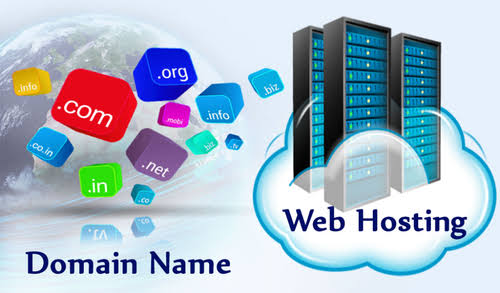
What is a domain name and how is it different from hosting
Understanding the Difference Between Domain Names and Web Hosting: A Beginner’s Guide
If you’re stepping into the world of websites, you’ve probably come across two terms that often confuse newcomers: domain names and web hosting. They might sound similar, but they serve very different purposes. Let me break it down in a simple way, drawing from my own experience building sites from scratch to launching blogs and online stores.
First off, what exactly is a domain name? Think of it as the street address of your website. It’s the easy-to-remember name that people type into their browsers to visit your site, like “example.com.” Without it, your site is like a house with no address — impossible to find. Domains are made up of two key parts: the second-level domain (SLD) and the top-level domain (TLD). Using google.com as an example, “google” is the SLD, and “.com” is the TLD. The TLD helps categorize the domain type, whether it’s commercial (.com), organizational (.org), or something niche like (.io).
Behind the scenes, domain names work through the Domain Name System (DNS), which translates these friendly names into the numerical IP addresses that servers actually use to locate each other. When you register a domain with an accredited registrar, such as those approved by the Internet Corporation for Assigned Names and Numbers (ICANN), you secure exclusive rights to that name for a period ranging from one to ten years. Plus, you provide contact details that can be seen publicly unless you opt for privacy protection.
Now, while a domain name points visitors to your site, web hosting is where all the magic happens. Hosting is like the physical house where your website lives. It’s a service that provides the server space needed to store your website’s files, databases, and all its content. This server has to be “on” all the time so visitors can access your site anytime they want.
In my journey creating websites, I quickly realized hosting is more than just storage. Good hosting providers offer extras such as bandwidth to handle the number of visitors, security measures like firewalls and malware scanning, and user-friendly control panels for managing everything easily. Popular hosts also provide one-click installers for content management systems (CMS), email services, and automated backups, which are lifesavers if something goes wrong.
When someone types your domain name into their browser, the hosting server answers the call, fetching your website’s files and delivering them to the visitor’s device. Without hosting, there’s nothing to serve — even if your domain name is active.
So, what’s the key takeaway? Domains and hosting are a package deal. You need a domain name so people can find your site, and hosting to keep the site running smoothly and reliably. Having one without the other simply won’t cut it:
– Domain without hosting: You’ll have a name, but visitors will see an empty page or error because there’s no website stored anywhere.
– Hosting without a domain: Your website exists, but visitors must know the complicated IP address to reach it — not exactly user-friendly or professional.
To help sum it all up, here are five quick differences I’ve found useful to remember:
1. Purpose: Domains give your site a memorable name to replace numeric IP addresses; hosting keeps your site live and accessible all the time.
2. Ownership: Domains are registered for fixed terms and need renewal; hosting is usually a subscription service you pay for regularly.
3. Cost: Domains can be affordable (e.g., 90,000UGX–250,000UGX per year), while hosting prices vary based on storage, bandwidth, and performance.
4. Providers: Domains are sold by ICANN-accredited registrars; hosting is offered by companies running the server infrastructure.
5. Performance: Domain choice impacts branding; hosting quality influences site speed, uptime, and reliability.
From launching my first blog to managing client sites, understanding this difference was pivotal. Remember, like a house needs a street address and a physical building, your website needs both a domain name and hosting to thrive online.
If you’re planning to create your own website, take the time to choose your domain carefully and pair it with reliable hosting. Over time, I’ll dive deeper into topics like picking the right domain name for your brand, selecting the best hosting plan based on your needs, and optimizing website performance so stay tuned!
📞 Phone / Call +256700393395 or WhatsApp +256700393395
🌍 Available in: Kampala Uganda